Outer Worlds Nationalist parties
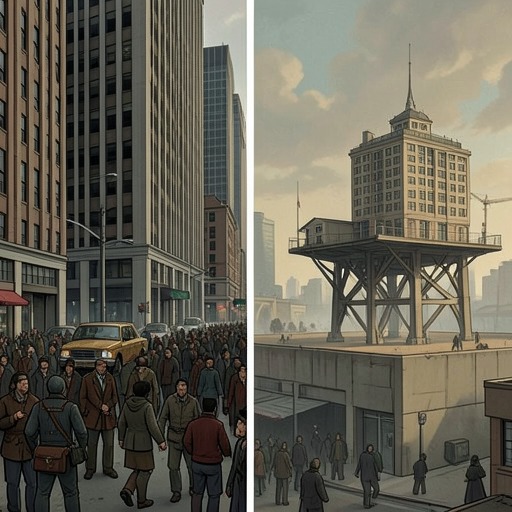
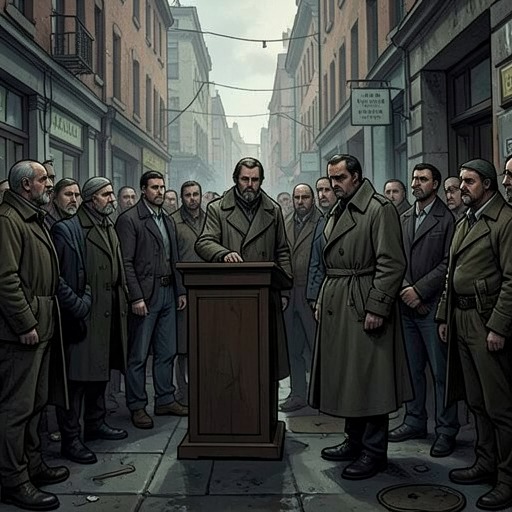
The Caves of SteelThe Outer Worlds Nationalist parties are political forces opposed to modernizing Earth through the introduction of robots. Their central warning is that Earth’s immense population and history of control over early spacefaring worlds make its recovery a potential threat to the wider Galaxy; as efforts to modernize Earth falter, these parties gain support.
Political context and aims
At Spacetown, R. Daneel Olivaw explains that support for a healthy, modernized Earth is not universal among the Spacers. Some fear that modernization would produce a dangerous, imperialistic Earth. This concern is strongest among older worlds nearer to Earth, whose populations have reason to remember the first centuries of interstellar travel, when Earth exercised political and economic control over their worlds.
The parties frame the question of robotization as a question of collective safety and political difference. They contend that Earthmen are unlike Spacers and cannot be fitted into the same traditions. In their account, imposing robots on Earth by superior force would risk unleashing destruction on the Galaxy. Their opposition therefore concerns not only the means of modernization but also whether Earth can safely rejoin a shared interstellar order.
Population and the case against modernization
The population imbalance gives this argument its force. R. Daneel contrasts Earth’s eight billion people with the scarcely five and a half billion people living across all fifty Outer Worlds combined. The figures turn the prospect of a modernized Earth into more than a dispute over technology: to the nationalists, a populous Earth recovering its capacity could upset the balance between Earth and the worlds that once came under its control.
R. Daneel also sets the parties’ growing influence against continuing difficulty in modernizing Earth. Despite cooperation from the Terrestrial government and most City governments, resistance persists and progress remains slow. He says that this failure has strengthened the Nationalist parties, making their warning about Earth’s difference and potential danger more politically persuasive.
Opposition and political consequences
The parties’ position is part of a wider conflict over Earth’s future. R. Daneel describes Spacetown’s belief that Earth’s modernization would benefit the Galaxy, while acknowledging strong opposition to that belief on the Outer Worlds. The competing positions expose an unresolved tension: modernization is presented as a common good by its advocates, but as a possible route back to Earthly dominance by its opponents.
The parties’ importance is consequently measured in the political effect of their opposition. As resistance on Earth slows the modernization program, nationalist arguments gain strength beyond Earth as well. The novel presents the prospect of robots being imposed by force as one of the fears these parties invoke, not as an action they themselves undertake. Their role is to show how Earth’s past, present population, and uncertain future shape the political choices of the wider interstellar community.